1. The Second Wave: Why 2025 Layoffs Felt Different
Eric Baxter
Jan 7, 2026
Behind the layoffs and uncertainty of 2025 lies a deeper shift in how we work. This article explores the upheaval—and the resilience rising beneath it…
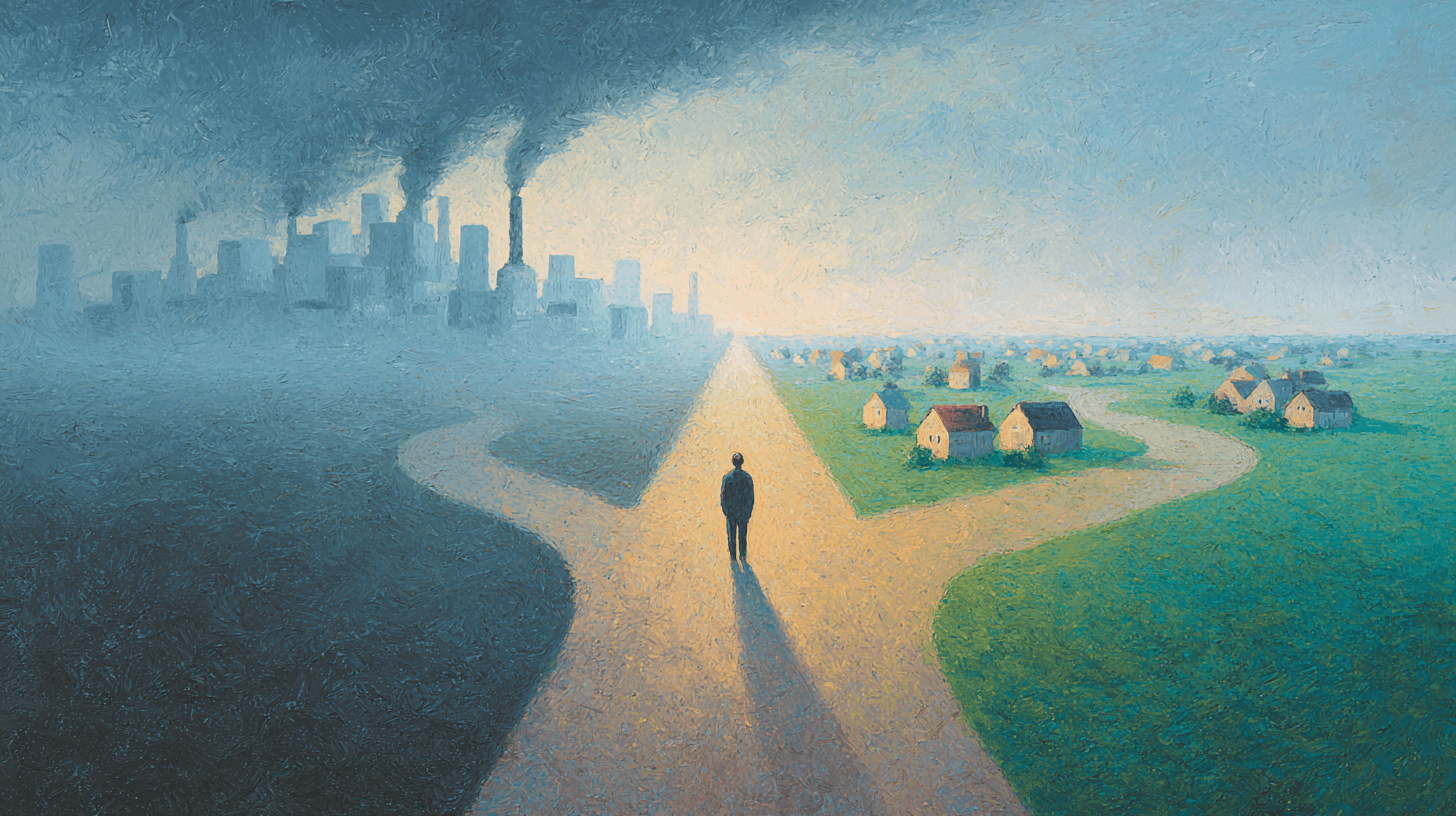
The Second Wave: Why 2025 Layoffs Felt Different
There’s a moment after a layoff where the the world goes silent.
Your badge stops working. Your team Slack lights up with shock. You tell your family over dinner, trying to keep your voice steady. You refresh your bank account. You stare at the ceiling at 2 a.m., doing the math.
Millions of people are living that moment right now.
On paper, some analysts frame this as a normal cycle, a temporary contraction, a statistical blip. But many of the experts paying closest attention warn that this is the early stage of an AI‑driven disruption unlike anything we’ve seen. Anyone living through it knows this moment isn’t ordinary. It is different. Something deeper is shifting under our feet.
And it’s not just happening to “them.”
It’s happening to all of us.
A Year of Unsettling Numbers
Let’s start with the facts. Not to overwhelm, but to set the scene with the honesty people deserve.
In 2025, U.S. companies announced more than 1.17 million layoffs, the highest total since the pandemic era. October alone saw over 153,000 job cuts, the worst October in more than two decades. Some industries saw layoffs that looked less like a cycle and more like a contraction. Few of us have lived through a year where gut-punch headlines became a weekly ritual.
If the story stopped there, it'd sound like collapse.
But the truth, as usual, is more complicated.
Because at the same time, unemployment has stayed in the mid-4% range. Weekly jobless claims recently dropped to the lowest level since 2022. Economists, puzzled, keep saying the same thing:
“The data doesn’t match the lived experience.”
And that is exactly the point.
We're entering a moment where the macro numbers paint one picture, while the human-level reality tells another.
The layoffs are real.
The churn is real.
The fragility is real.
And most importantly: the shift in how work happens is real.
This tension between statistical calm and lived upheaval is what defines the “second wave.”
Why This Wave Feels Different
Layoffs aren't new. Corporate cycles rise and fall. Projects get shelved. Budgets get tightened. Most people, at some point in their life, fall out of the economic boat.
But what’s happening now feels different for four reasons.
1. The layoffs aren’t isolated, they’re systemic.
In previous eras, layoffs came from recession, over-investment, or a single struggling sector. Today, job cuts hit tech, media, manufacturing, retail, finance, and back-office roles all at once. It's not a sector problem. It’s a structure problem.
2. AI has become a force multiplier.
Even though not every layoff is directly caused by AI, the technology hangs over every decision. Some studies estimate that 12-18% of U.S. jobs could be automated with current AI capabilities, and up to 50% disrupted over the next decade once automation, robotics, and software are fully integrated into workflows.
Executives may not say “AI replaced your job,” but they can’t ignore the economic logic it creates.
Suddenly, the question isn’t:
“Do we need this person?”
but
“Do we need this role?”
3. The corporate contract has frayed.
Workers aren’t just losing jobs, they’re losing trust.
For years, people were told to upskill ("learn to code"), cross-train, become more agile, adopt new tools, embrace AI. Many did. And yet layoffs still came.
It’s not a moral failure.
It’s not a performance issue.
It’s a structural avalanche.
4. Everything feels temporary now.
Even for those still employed, there’s a hum of anxiety under everyday tasks.
You feel it in meetings.
You feel it in your inbox.
You feel it whenever a new AI tool gets rolled out with the phrase "efficiency improvement."
This wave doesn’t just cut jobs — it erodes a sense of safety.
The Data Isn’t Telling the Real Story
Economists are scratching their heads because the labor market looks surprisingly healthy.
Unemployment is steady.
Hiring continues in some sectors.
Jobless claims stay low.
So what’s happening?
People are getting laid off… and then finding something else fast — but not necessarily something stable.
Some jump to a new company.
Some take fractional or gig roles.
Some contract.
Some cobble together multiple small income streams.
Some start small businesses out of necessity or inspiration.
Some leave corporate life entirely.
The numbers capture employment.
They don’t capture precarity.
Being “employed” is not the same as feeling secure.
We’ve entered an era where millions of workers are technically working… but living in a constant state of “Don’t breathe too loudly. The next wave is coming.”
This creates a strange duality:
The data says:
Everything is fine.
Workers say:
No, it’s really not.
And both are, in their own way, true.
Layoffs as a Mirror: What They Reveal About Us
If there’s one thing this era reveals, it’s that human beings are far more adaptable than the systems we build.
Consider this:
Even as layoffs soared past a million in 2025, millions of people adapted in real time. They:
reinvented careers
reskilled
jumped into new industries
built side businesses
turned crafts into revenue
leaned into community
discovered work that felt meaningful
or simply survived — which is its own form of brilliance
This is the part of the story the headlines miss.
Layoffs aren’t just economic events.
They’re identity events.
They force questions most people avoid:
Who am I when the job title disappears?
What do I actually want to build?
Who am I accountable to — myself, my family, or a corporation?
Where do I belong?
What work feels like mine?
And in that sense, the “second wave” is not just an ending.
It’s an unveiling.
The Moment Before the Turn
There’s a point in every transformation where it feels like the ground is collapsing. But often, something else is happening beneath the surface.
Systems break.
People bend.
Communities rediscover themselves.
New forms of work emerge.
Old assumptions fall away.
And suddenly, the question isn’t:
“How do I get back to where I was?”
but
“What if I don’t have to go back?”
This shift — from fear to curiosity — is the beginning of resilience.
The layoffs of 2025 are not the end of work.
They’re the end of a model of work that no longer serves most people.
What Comes Next (and Why There’s Reason to Hope)
Here is the quiet truth underneath all the upheaval:
Most people who lost jobs this year wont return to the same kind of job.
And for many, that may turn out to be a turning point — not a tragedy.
As we’ll explore in the upcoming articles, there’s a growing movement forming at the edges:
individuals rediscovering local, human-scale work
small businesses rising from unexpected places
crafts, trades, healing arts, and community services growing
people using AI not as a threat but as a tool to build independent livelihoods
entire towns cultivating local resilience
families reshaping their lives around autonomy instead of corporate dependency
This is not naïve optimism.
It’s what is already happening — quietly, beneath the noise.
There is something deeply human about what emerges when the old structures crumble:
Ingenuity.
Courage.
Creativity.
Neighborliness.
A return to meaning.
The layoffs of 2025 may be remembered not just as a crisis, but as the moment when millions of people realized:
“If the old system no longer protects me… then maybe I don’t have to live inside it anymore.”